
When a PPE product has been CE certified, the certification applies to the approved product type: its design, materials, components, manufacturing process, intended use, technical documentation and test evidence.
A product change does not automatically mean full re-testing is required. However, any change that could affect safety, protection or compliance must be formally assessed and documented. For Category II and Category III PPE, the Notified Body should be involved where the change may affect the approved type or the validity of the certificate.
The key question is:
Could this change affect the product’s ability to meet the Essential Health and Safety Requirements?
If the answer is yes, or even possibly, the change may trigger Notified Body review, targeted re-testing or a certificate update.
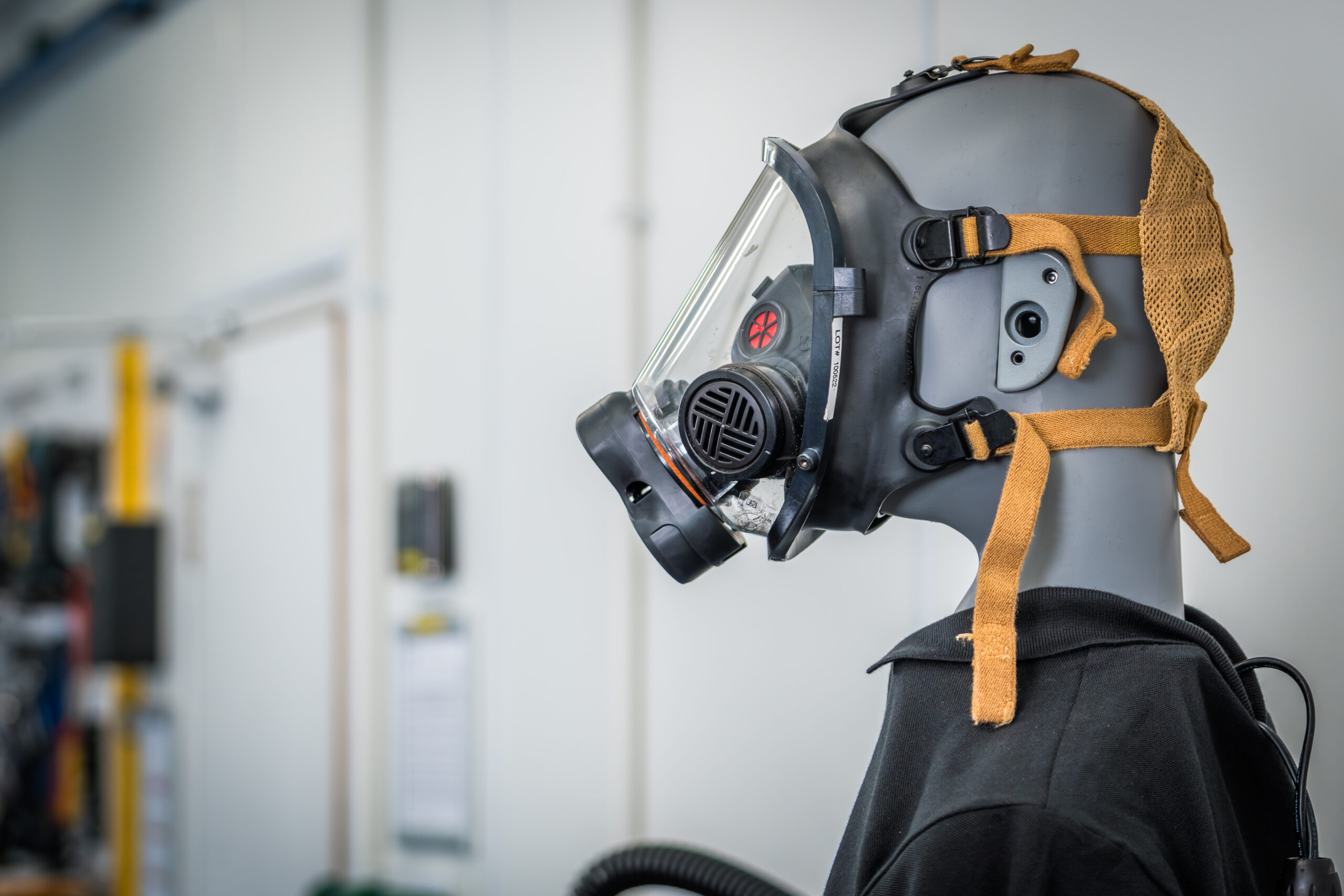
Changes most likely to trigger review or re-testing
The most important triggers are:
- Material changes
Changing a rubber, plastic, textile, leather, foam, coating, filter material, adhesive or other safety-related material can affect performance. This includes changes to formulation, grade, thickness, hardness, flame behaviour, chemical resistance, ageing or durability.
Material changes are one of the clearest reasons to carry out a technical review and, where relevant, repeat testing.
- Critical component changes
Replacing or modifying components that contribute to protection, fit, strength, sealing, airflow, filtration or safe use is likely to require review.
Examples include straps, buckles, valves, filters, face seals, lenses, hoses, connectors, harnesses, gauges, alarms and adjustment systems.
- Design or dimensional changes
Changes to shape, size, geometry, tolerances or construction can affect fit, sealing, strength, coverage, ergonomics and compatibility.
Even small dimensional changes can be significant where PPE relies on a close fit, seal, airflow path or load-bearing structure.
- Manufacturing process changes
A product may look the same but perform differently if the manufacturing process changes.
Examples include changes to moulding, curing, bonding, welding, stitching, assembly, coating, finishing, production site or inspection method.
Where the process affects safety-critical characteristics, the change should be reviewed and may need validation or testing.
- New tooling or moulds
A new mould tool can affect dimensions, surface finish, wall thickness, sealing faces, connector fit and repeatability.
For non-critical parts, inspection may be enough. For safety-critical parts, such as facepieces, valve bodies, connectors or filter housings, targeted performance testing may be needed.
- Supplier changes
Changing supplier should not be treated as a purely commercial decision. A new supplier may introduce differences in materials, processes, tolerances or quality controls.
If the supplier provides a safety-critical material, component or subassembly, the manufacturer should demonstrate equivalence or carry out further testing.
- Changes to intended use or claims
Any new protection claim, application, environment of use, performance level, size range, compatibility claim or user instruction can trigger review.
A product must not be marketed for a new use unless the evidence and certification support that use.
- Changes to standards or state of the art
When a harmonised standard is updated, replaced or withdrawn, the manufacturer should assess whether the certified product still reflects the current state of the art.
This may not always require full re-testing, but it should trigger a documented review.
What should the manufacturer do?
For every relevant product change, the manufacturer should:
- describe exactly what is changing;
- identify which safety functions could be affected;
- map the change against the applicable Essential Health and Safety Requirements and standards;
- decide whether existing evidence is still valid;
- carry out targeted testing where needed;
- involve the Notified Body where the certificate may be affected;
- update the technical file, risk assessment, drawings, bill of materials, instructions and Declaration of Conformity where required.
The aim is not to re-test everything automatically. The aim is to prove, with evidence, that the changed product remains compliant.
RPE-specific examples
Respiratory Protective Equipment needs particular care because small changes can affect breathing resistance, leakage, airflow, filtration, flame performance and practical use.
Change to rubber compound in a demand valve
A new rubber compound used in a demand valve, diaphragm or seal could affect flexibility, sealing, ageing and valve response.
Likely review areas include breathing resistance, leak-tightness, flow performance, valve function, temperature conditioning, ageing and cleaning resistance.
This type of change is likely to need Notified Body review, and repeat breathing resistance testing may be required.
Change to webbing material on an SCBA set
Changing the webbing on a self-contained breathing apparatus set may affect strength, adjustment, comfort, cylinder retention and flame performance.
Likely review areas include tensile strength, stitching strength, slippage, practical performance, donning and doffing, heat resistance and flammability.
For firefighting SCBA, repeat practical performance and flammability testing may be needed.
Introduction of a new mould tool
A new mould tool for an RPE component may affect dimensions, sealing surfaces, connector fit, wall thickness, airflow paths and leakage.
For critical parts such as facepieces, valve housings, connectors or filter housings, dimensional inspection alone may not be enough. Leak-tightness, breathing resistance or practical performance testing may be required.
Change of material supplier
A new material supplier may appear to provide the “same” material, but small differences in formulation, additives, hardness, porosity, coating or ageing behaviour can affect RPE performance.
For critical materials, the manufacturer should obtain evidence of equivalence and consider targeted testing. If performance could be affected, the Notified Body should be consulted.