
In our RPE testing laboratory, accurate and reliable pressure measurement is a daily requirement. Whether we are carrying out breathing resistance testing, duration testing, or SCBA breathe-down work, we need instrumentation that gives us confidence in the data and makes it easy to record and review results.
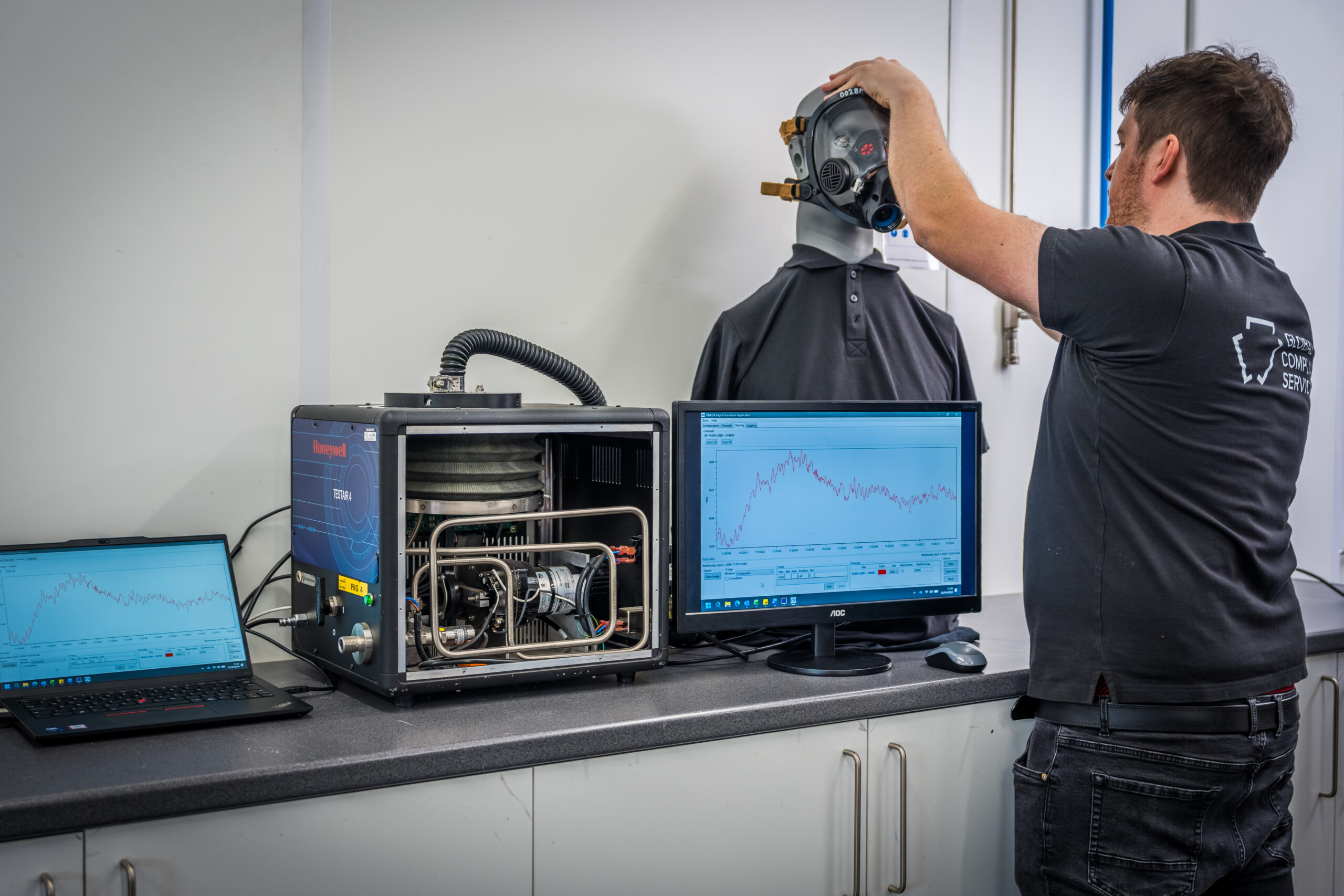
One device we use regularly is the Omega PXM409 series pressure transducer.
For us, one of the biggest practical advantages is the USB connectivity available on the range. Being able to connect directly to a PC, chart live pressure data, and log results is extremely useful during longer tests where trends matter just as much as individual readings. For SCBA breathe-downs and duration-based assessments, this makes it much easier to see what happened across the full test, not just at a single point in time.
The ability to adjust resolution and sample rate is also valuable. Some RPE tests need a clear view of small pressure changes, while others benefit from a faster sampling rate to capture short-duration peaks. Having that flexibility helps us set the instrument up around the test method rather than forcing the test to fit the instrument.
From a specification point of view, the PXM409 is well suited to laboratory and industrial testing. The series offers ±0.08% full-scale accuracy, a broad range of gauge, absolute, vacuum, compound, and barometric pressure ranges, and a 5-point NIST-traceable calibration as standard. The datasheet also highlights its stainless steel construction, 316L stainless steel wetted parts, low thermal drift, IP-rated options, and fast response time of under 1 ms.
For RPE manufacturers, this combination is important. Breathing resistance and pressure-flow related tests often involve relatively small pressure changes, long test durations, and the need for repeatable, defensible data. A pressure sensor that is accurate, robust, configurable, and easy to log from can make product development and pre-compliance testing much smoother.
Overall, the PXM409 has been a strong fit for the way we work: accurate enough for detailed lab measurements, rugged enough for regular use, and practical enough to support long-duration test logging and reporting.