
Reliable RPE testing depends on more than the test method itself. It also depends on the equipment used to carry out the test and the confidence we can place in every measurement.
As an ISO 17025 accredited testing laboratory, equipment control is a core part of how we maintain the integrity of our results. Any item of equipment that can influence a test result must be suitable for its intended use, properly maintained, calibrated where required and controlled throughout its working life.
For RPE testing, this can include pressure transducers, balances, gas analysers, spirometers, flow measurement equipment, reference gases, software and other supporting apparatus. Each item has a role to play and each one must be managed in a way that supports valid, reliable and traceable results.
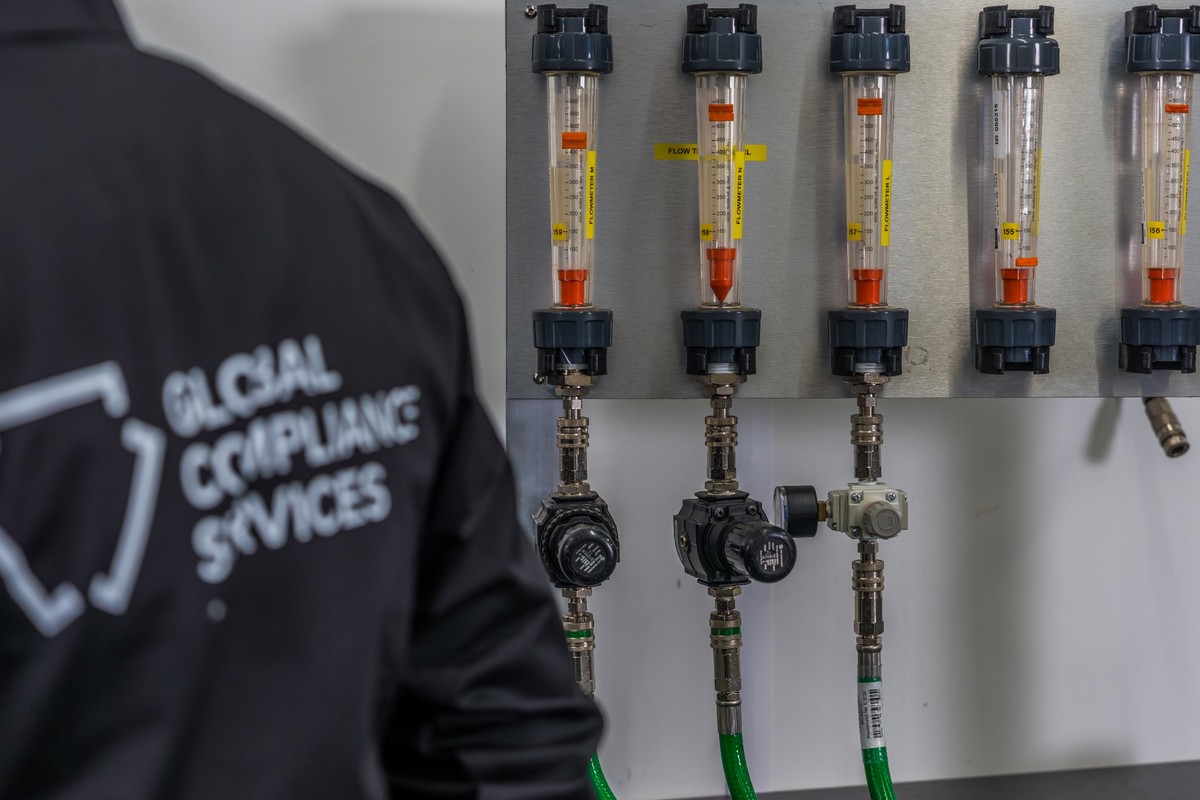
All of our measurement equipment is held on an equipment register. This register defines key information such as equipment identity, calibration requirements, calibration intervals and acceptance criteria. When equipment returns from calibration, it is checked against those criteria before being placed back into service.
Where calibration is required, it is carried out by an ISO 17025 accredited calibration provider. This helps maintain metrological traceability, meaning measurement results can be linked through an unbroken chain of calibrations to appropriate national or international references.
But calibration alone is not the whole story.
Before equipment is used, we also carry out pre-use checks where required. These checks help confirm that equipment is performing as expected at the point of use. Examples may include checking a balance with a test weight, carrying out a pre-use calibration of a gas analyser using reference gases, or verifying volume using a spirometer.
These checks are important because they provide confidence between formal calibration events. They help identify potential issues before testing begins and ensure that equipment remains suitable for the work being carried out.
Equipment is also controlled through procedures for handling, storage, use and maintenance. If any item is damaged, gives questionable results or is outside its specified requirements, it is taken out of service until it has been assessed and verified as suitable for use again.
The aim is simple: every result we report should be supported by equipment that is fit for purpose, properly controlled and demonstrably reliable.
In RPE testing, small measurement differences can matter. That is why equipment control is not just an administrative requirement. It is one of the foundations of trust in the laboratory process. Why not get in touch with the team to find out more.