
Introduction
EN 12941 specifies the requirements, testing, and marking for powered filtering respiratory protective devices (PAPR) with loose-fitting respiratory interfaces such as hoods or helmets.
The 2023 edition replaces EN 12941:1998 + A2:2008 and represents a major technical and structural revision aligning with modern ISO 16900-series test methodologies, updated terminology, and EU Regulation 2016/425 for PPE conformity assessment.
This whitepaper summarises the key structural, technical, and procedural differences, their implications for manufacturers, and testing laboratories seeking compliance with the 2023 standard.
Structural and Terminological Updates
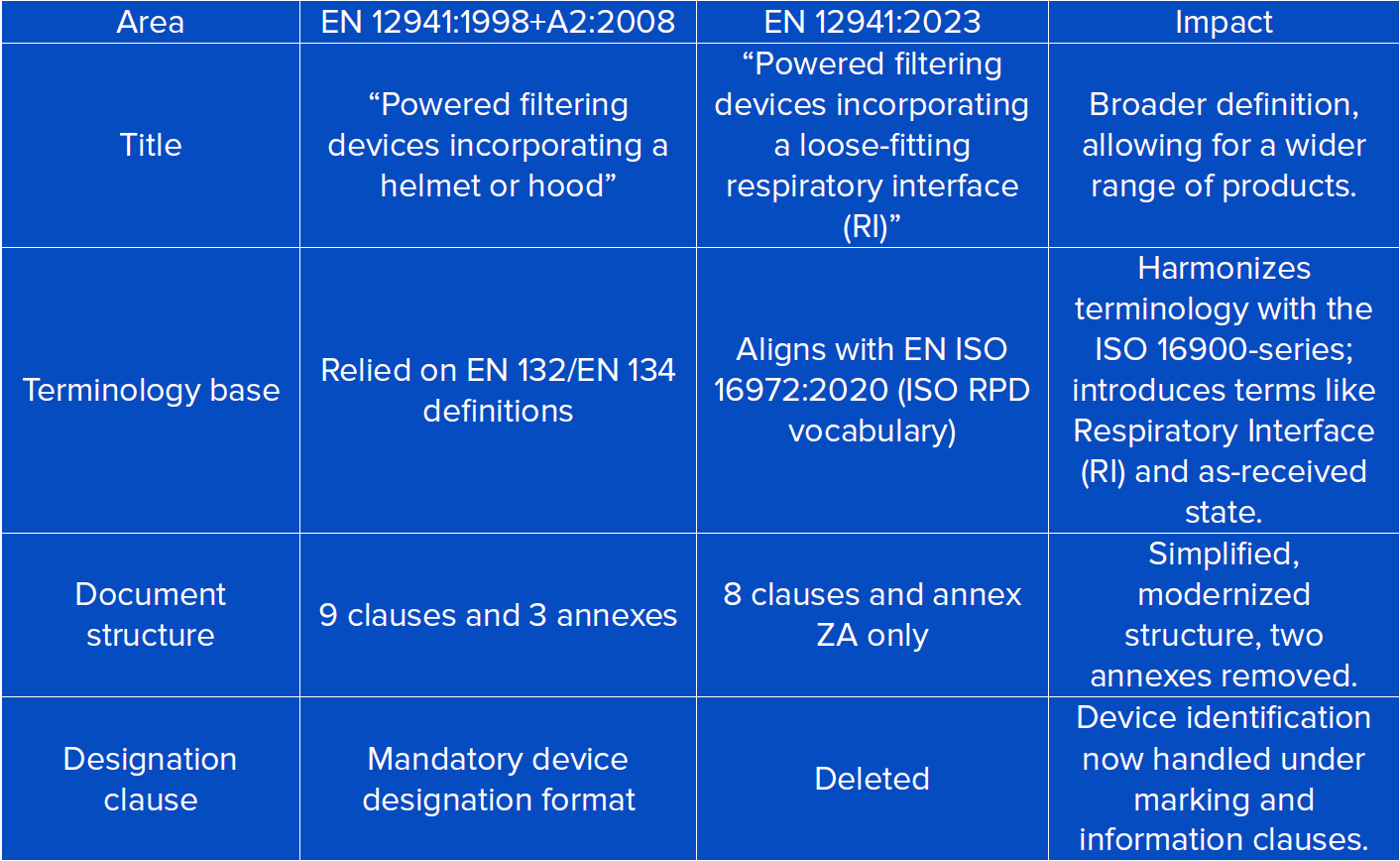
Classification Table Changes
Both versions retain TH1, TH2, TH3 classes based on inward leakage (10 %, 2 %, 0.2 %) and particle filter penetration limits.
The 2023 revision extends coverage with Hg P (Mercury), and NO P (Nitrogen oxides) filters are now permitted across all classes (TH1–TH3). Table 1 in 2023 also explicitly distinguishes inward leakage (IL) for gas filter systems vs total inward leakage (TIL) for combined and particle systems.
Scope Refinement

Implication: Devices with integrated clothing or novel RIs (e.g., powered suits) now fall within EN 12941:2023.
Key Changes in European Foreword
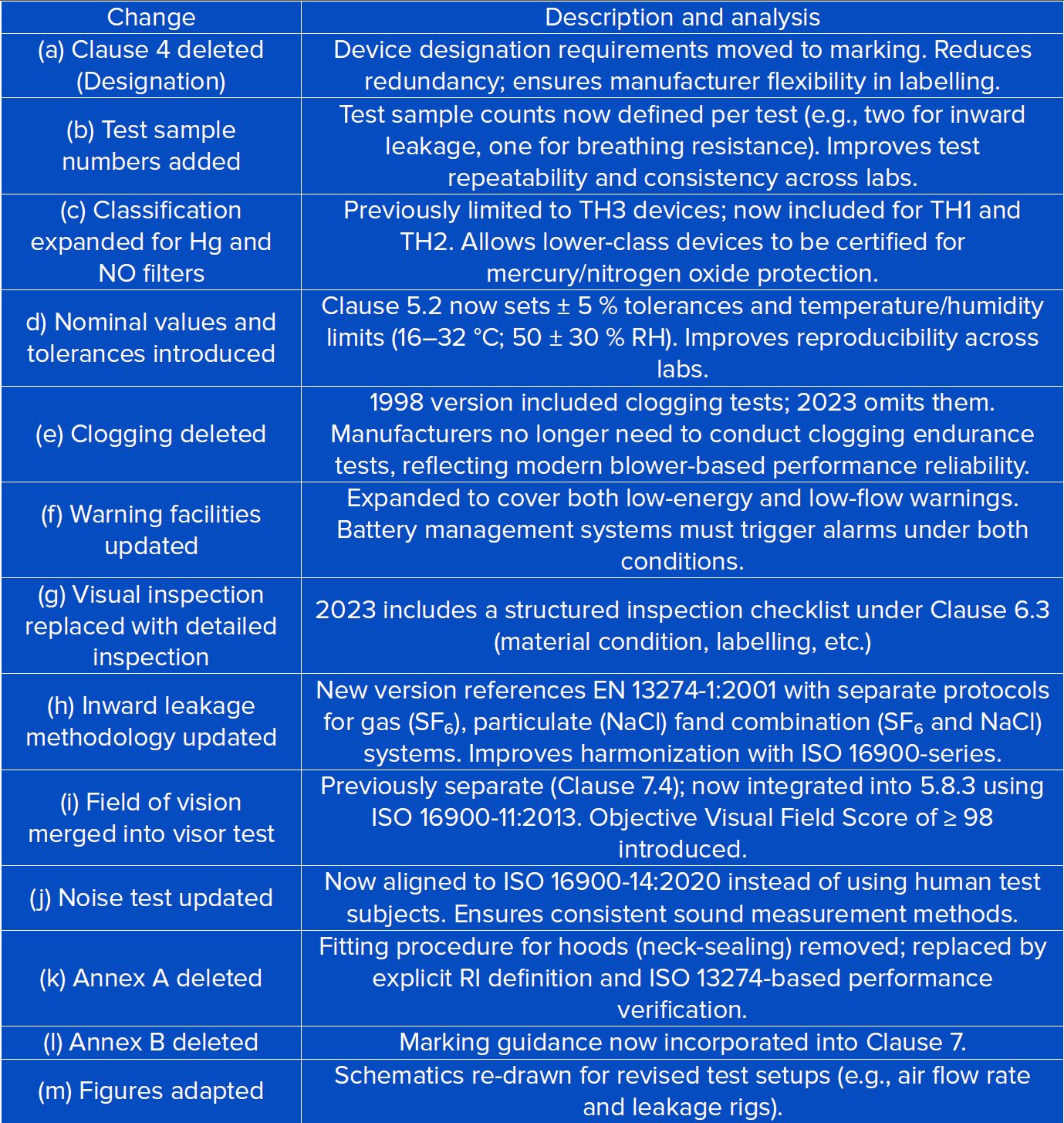
The European Foreword of EN 12941:2023 lists the principal technical changes (items a–m). Below is a deep dive into each with commentary.
Specific Requirement Comparisons
Air Supply and Flow Rate
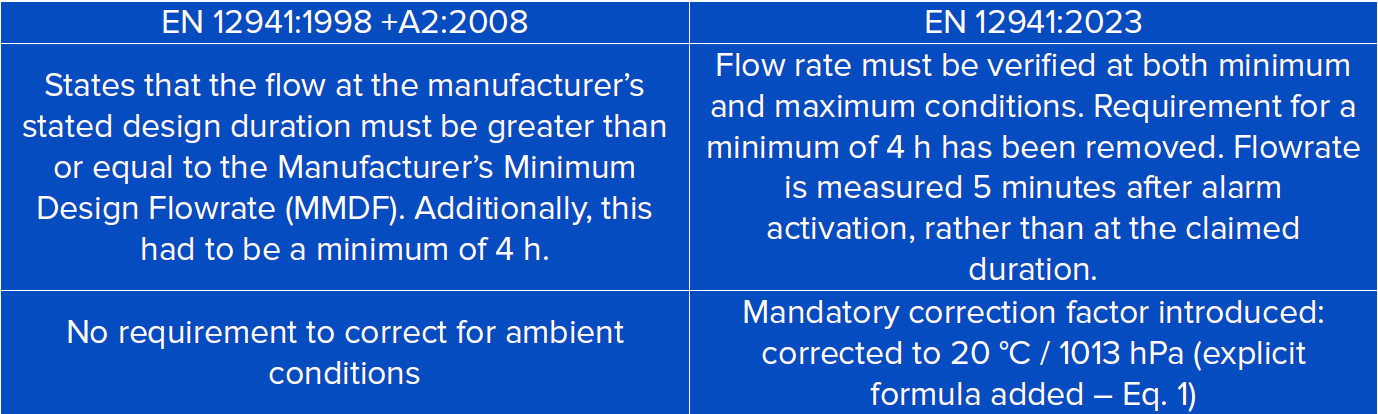
Implication: Testing labs must now normalize air flow readings, improving cross-lab comparability. Manufacturers must be aware that the device must continue to operate for 5 minutes after the low energy alarm activation and that the flow should be above MMDF.
Electrical aspects

Implication: Manufacturers must be aware of the new requirements around alarm activation.
Mechanical strength

Implication: Manufacturers designing their product for rugged applications have a specific clause to test to, to demonstrate the durability of their product. Additional marking privileges are conferred.
Resistance to temperature

Implication: Manufacturers must be aware of the change, and consider what impact this may have on the materials used in the construction of their devices.
Inward Leakage (IL/TIL)

Implication: Manufacturers must be aware of the need to test with SF6 if their system uses gas or combination filters.
Practical Performance and Ergonomics
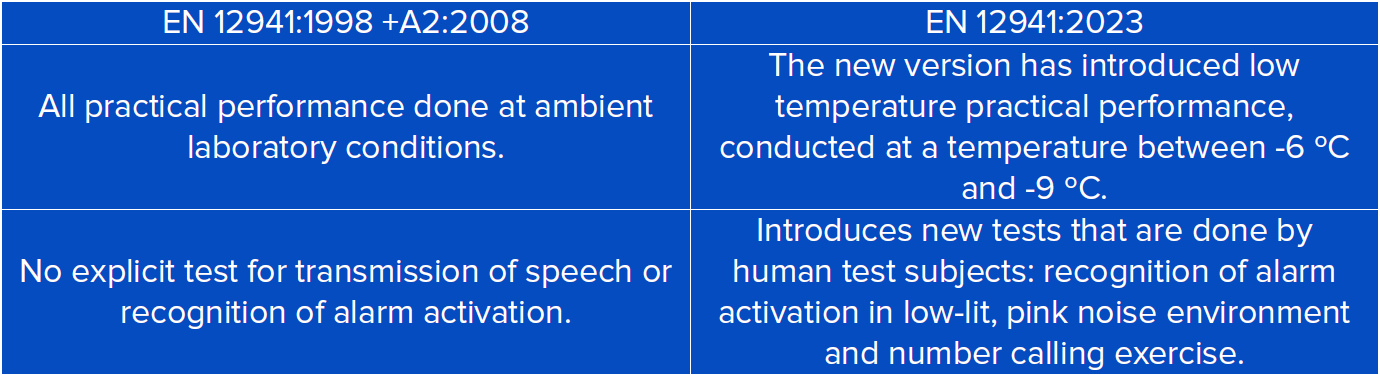
Implication: Manufacturers must be aware of the more demanding test conditions and new requirements.
Materials and Risk Assessment

Implication: manufacturers must submit a suitable declaration at the time of testing to confirm that such an assessment has been made.
Field of Vision

Implication: Manufacturers must be aware of the new test method and introduction of ISO head forms.
Noise level testing

Implication: Manufacturers must be aware of the change in test method.
Marking and information

Implication: Manufacturers must review label artwork and packaging layouts to align with these new graphical requirements.
Conclusion
EN 12941:2023 represents a major modernization of PAPR standards, aligning with the ISO16900 family and the EU PPE Regulation 2016/425. Manufacturers must adapt not only to new testing protocols but also to process-oriented expectations such as documented risk assessments, harmonized flow corrections, and enhanced marking clarity.
By implementing these updates early, manufacturers can ensure compliance, future-proof product certification, and maintain access to both EU CE and UKCA markets.